
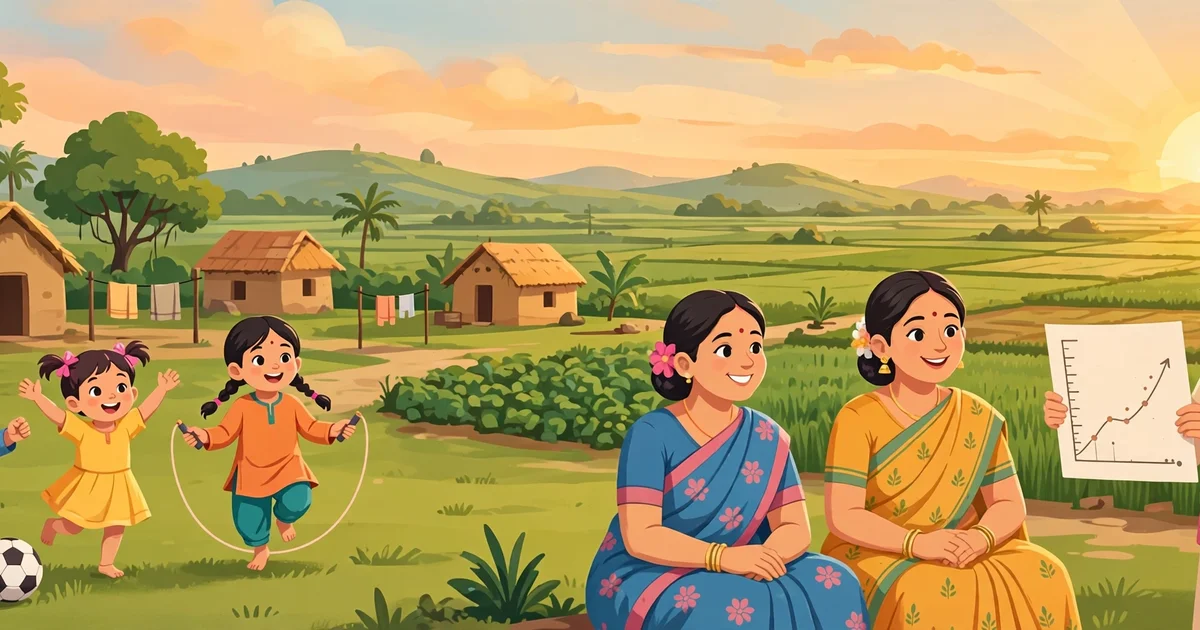
The simple answer is: yes — across India’s villages, Poshan Abhiyaan success stories show real change: malnourished children recovering to healthy weights, anaemic mothers regaining strength, communities adopting kitchen gardens and better feeding. These field-reported turnarounds from workers, health staff, and families show what sustained nutrition work achieves.
Poshan Abhiyaan (the Prime Minister’s Overarching Scheme for Holistic Nourishment), launched in March 2018, targets stunting, undernutrition, anaemia, and low birth weight through a life-cycle approach — and through Poshan Tracker, the Government of India’s official nutrition-monitoring app, every recovery is now recorded. Behind the dashboards are human stories worth telling.
👉 Every recovery starts with measurement — check a child’s growth free with our Poshan Calculator, built on WHO (World Health Organization) standards.
In this article, you will understand:
- How severely malnourished children have recovered through centre-based care
- How anaemia control and maternal nutrition efforts changed women’s lives
- How community gardens, events, and behaviour change multiplied impact
- What common ingredients made these field successes possible
What Do Poshan Abhiyaan Success Stories Have in Common?
Field success stories share a pattern: they begin with detection — a growth session flags a child in the red zone, an anaemia camp reveals a mother’s low haemoglobin, a home visit finds a family unaware of supplementary nutrition. Then comes steady, unglamorous work: regular rations, repeated counselling, completed referrals, a worker who refuses to give up.
The stories below are field-reported accounts — shared by programme staff, community reports, and local media — illustrating the change the mission aims for, not independently verified statistics.
Bottom line: every success story is really a story about follow-through.
How Did a SAM Child Recover Through Regular Monitoring?
Workers tell a familiar story: a two-year-old flagged as SAM (Severe Acute Malnutrition) at a routine growth monitoring session. His mother, a daily-wage labourer, had been feeding him diluted milk and little else, unaware he was slipping into danger.
The response followed protocol: referral for medical assessment, energy-dense supplementary nutrition, weekly weighing recorded in Poshan Tracker, and counselling on frequent feeding with local foods — khichdi with oil, mashed dal, banana, eggs where acceptable. Over months, field reports describe the child moving from red to yellow to green — grams per week, celebrated by the whole centre.
Disclaimer: SAM is a medical condition; recovery stories describe programme-supported care, and any child showing danger signs needs immediate medical attention, not just supplementary feeding.
How Did Anaemia Camps Change Women’s Lives?
Anaemia among women and adolescent girls has been a tough target. Field accounts describe the breakthrough: a screening camp where a young mother learns her haemoglobin is critically low — explaining exhaustion she had accepted as normal.
What changed things was the system around the diagnosis: weekly IFA (iron and folic acid) with the worker checking consumption, deworming, counselling on iron-rich local foods like bajra, jaggery, and greens, and re-testing after months. Workers report women describing renewed energy — able to work and care for children as they had forgotten was possible.
👉 Anaemia prevention starts with awareness — and growth tracking helps too. Try the free Poshan Calculator.
How Did a Nutrition Garden Transform a Centre?
In several reported cases, a centre’s turning point was not a new scheme but a patch of land: a worker in a water-scarce region started a Poshan Vatika (nutrition garden) with drumstick saplings and a few beds of greens, using handwash wastewater and kitchen-waste compost.
Within a year, the garden reportedly supplied greens for hot cooked meals several days a week, mothers replicated mini-gardens at home, and children who once refused vegetables asked for “garden palak.” The garden became the centre’s classroom — and its most persuasive counsellor.
How Did Behaviour Change Campaigns Reach Reluctant Families?
Some of the most-cited successes involve minds changed, not just food. Poshan Maah (Nutrition Month, every September) and Poshan Pakhwada (Nutrition Fortnight, March) campaigns produced striking local turnarounds, field reports say:
- A village where colostrum was traditionally discarded, now practising early breastfeeding after street plays and mothers’ meetings.
- Families shifting from feeding infants only dal water to proper complementary feeding with mashed family foods at six months.
- Men attending nutrition meetings for the first time, then ensuring pregnant wives rest and eat the extra meal.
- Adolescent girls who once hid their IFA tablets now reminding each other to take them weekly.
These are behaviour shifts no ration packet can deliver — they come from repeated, respectful conversation.
How Did Technology Help Find Missing Children?
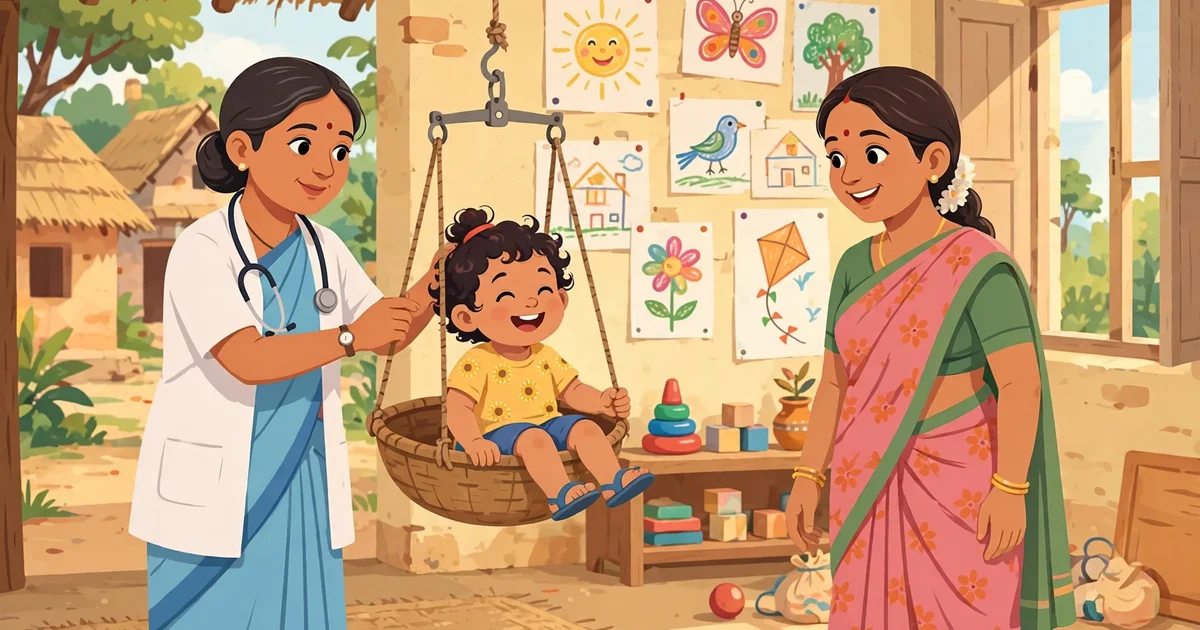
Before Poshan Tracker, a child who stopped coming simply faded from the register. Field staff report the app’s due lists changed this: workers get alerts for missed growth monitoring, and supervisors see coverage gaps.
Migrant children were re-enrolled at new centres without losing growth history; “invisible” home-born children were found through surveys. The technology didn’t do the finding — it made the missing visible so workers could act.
👉 Digital tools plus human follow-through save lives — start with a simple growth check on the free Poshan Calculator.
How Did Convergence Multiply Impact?
Many success stories credit convergence — different departments working together instead of in silos:
- Health department anaemia camps held at Anganwadi centres, combining screening with counselling.
- Rural development self-help groups running community kitchens or bulk-buying nutritious foods.
- Panchayats allocating land and water for nutrition gardens.
- Schools hosting joint growth-monitoring drives for adolescent girls.
- Agriculture staff advising on nutrient-rich crops for centre gardens.
When the ANM (Auxiliary Nurse Midwife), ASHA (Accredited Social Health Activist), Anganwadi worker, and panchayat plan together, families experience one coherent system instead of four disconnected schemes.
Programme Claims vs Independent Evidence: How Should Readers Judge?
| What programme reports show | What to keep in mind |
|---|---|
| Rising activity counts on the Jan Andolan dashboard | Activity counts measure effort and reach, not nutrition outcomes by themselves |
| Individual recovery stories from the field | Powerful illustrations, but selected cases — not average results |
| District-level improvements in service coverage | Coverage gains are real progress, though outcome data lags behind |
| Behaviour change reported by workers | Valuable ground truth, best read alongside survey data like NFHS |
| Technology-enabled tracking of beneficiaries | Monitoring improves accountability; impact depends on field action |
👉 Key takeaway: celebrate the stories, respect the data — success stories show what is possible, while large-scale surveys show how far the mission still has to go.
What Made the Difference in Successful Villages?
Comparing field accounts, the same ingredients appear again and again:
- A committed worker: nearly every story names one who went beyond duty.
- Early detection: monitoring caught problems while still reversible.
- Family involvement: mothers-in-law, husbands, fathers included, not lectured.
- Consistent supply: rations and tablets on time, month after month.
- Local solutions: local foods, gardens, language — not imported templates.
- Follow-up: returning, re-weighing, re-counselling.
Bottom line: there is no secret ingredient — the recipe is detection, supply, counselling, and persistence.
How Can Your Village Create Its Own Success Story?
Success is replicable. Any community can start with these steps:
- Ensure every child under six is registered at the Anganwadi centre and attending growth monitoring.
- Get every pregnant woman registered early and every adolescent girl enrolled for IFA.
- Start a nutrition garden — even a few pots of greens count.
- Hold monthly community conversations on one nutrition theme at a time.
- Track progress visibly: a wall chart showing children moving from red to green motivates everyone.
- Share your story — recognition inspires neighbouring villages to try.
See the official Jan Andolan dashboard at poshanabhiyaan.gov.in.
FAQs
Are Poshan Abhiyaan success stories verified?
Field stories are reported by programme staff and local media as illustrative cases; large-scale progress is better judged through national surveys and official programme data.
What is the most common type of success story?
Recovery of malnourished children through growth monitoring, supplementary nutrition, and counselling is the most reported turnaround.
How does Poshan Tracker contribute to these successes?
The app makes missed children and mothers visible through due lists and alerts, so workers can follow up before small problems become emergencies.
Can one village really change its nutrition outcomes?
Yes — committed workers, regular monitoring, family involvement, and local solutions can transform a village’s nutrition picture, field accounts show.
Where can I read official programme updates?
The official portal at poshanabhiyaan.gov.in publishes activity data and campaign information under the Jan Andolan dashboard.
Conclusion
These success stories remind us: behind every data point is a child who recovered, a mother who regained strength, a village that changed its food habits. The formula is simple — detect early, supply consistently, counsel patiently, involve families, follow up relentlessly. Your village can write the next story: register every child, monitor every month, let no one slip away.
👉 Begin your family’s nutrition story today with the free Poshan Calculator — WHO-based growth checks in seconds, no download required.