
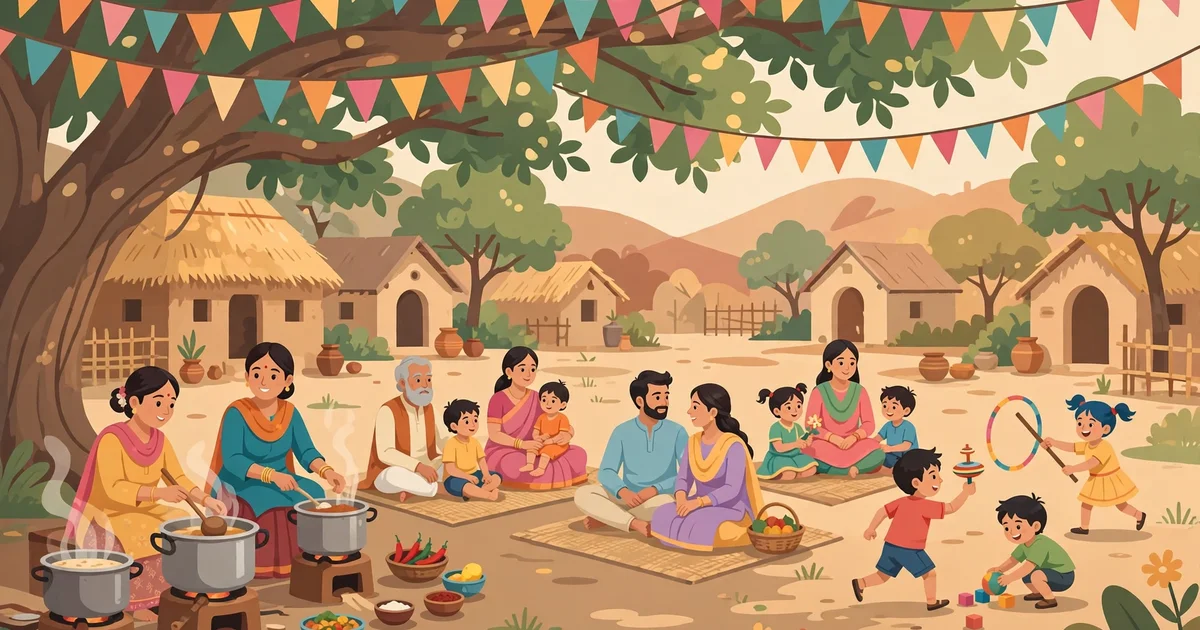
The simple answer is: Community-Based Events Poshan (CBEs) are village-level celebrations every Anganwadi centre is expected to organise — at least two per month, at ₹250 per event — turning nutrition messages into community action. With simple planning, small events on breastfeeding, complementary feeding, anaemia, and millets can draw whole villages into the fight against malnutrition.
Under Poshan Abhiyaan (the Prime Minister’s Overarching Scheme for Holistic Nourishment), CBEs are the “Jan Andolan” (people’s movement) in action: Godh Bharai (baby shower) ceremonies, Annaprashan Diwas (first-food ceremonies), Suposhan Diwas, and Village Health Sanitation and Nutrition Days (VHSND). Put simply, Community-Based Events Poshan workers organise each month take nutrition out of registers and into real life — with songs, food, games, and neighbours.
👉 Keep the nutrition conversation going at home too — try our free Poshan Calculator for WHO (World Health Organization) based child growth checks.
In this article, you will understand:
- What Community-Based Events are and why two per month are mandated
- How to plan a CBE step by step on a ₹250 budget
- Which event formats work best — from VHSND to millet food festivals
- How to involve men, youth, and the whole village for lasting impact
What Are Community-Based Events Under Poshan Abhiyaan?
These are structured village-level events organised by Anganwadi workers to promote nutrition behaviours through celebration, not lectures. Each centres on a theme — antenatal care, breastfeeding, complementary feeding, growth monitoring, anaemia, hygiene, millets — and uses the occasion to counsel families, demonstrate practices, and recognise progress.
The mandate: at least two CBEs per month per centre, at ₹250 per event. Small money — but spent on a community gathering, its impact far exceeds its cost.
Bottom line: CBEs convert nutrition advice into village festivals — and festivals are remembered long after pamphlets are forgotten.
Why Are Two Events Per Month Required?
The two-per-month rhythm is deliberate — behaviour changes through repeated exposure:
- Regularity builds habit: monthly contact keeps nutrition on the village agenda.
- Different audiences: one event for pregnant women, another for adolescent girls or young mothers.
- Seasonal relevance: themes follow the farm calendar — harvest festivals, monsoon hygiene, winter feeding.
- Visibility: frequent events show the centre is active and worth visiting.
What Are the Standard CBE Formats?
Several formats are widely used across states:
- Godh Bharai: a traditional baby shower in the third trimester — celebrating pregnancy while counselling on birth preparedness, institutional delivery, and breastfeeding.
- Annaprashan Diwas: the first-food ceremony for babies completing six months — demonstrating correct complementary feeding with mashed family foods.
- Suposhan Diwas: a nutrition day focused on a theme like anaemia prevention or dietary diversity, often with cooking demonstrations.
- VHSND (Village Health Sanitation and Nutrition Day): the monthly convergence event where the ANM (Auxiliary Nurse Midwife), ASHA (Accredited Social Health Activist), and Anganwadi worker together provide immunization, check-ups, growth monitoring, and counselling at one venue.
- Kishori Diwas: a day for adolescent girls with health check-ups, IFA (iron and folic acid) distribution, and life-skills activities.
How Do You Plan a CBE Step by Step?
Good events look effortless because the planning was thorough. Follow this sequence:
- Choose the month’s theme from local needs — check Poshan Tracker for gaps like missed check-ups or anaemia cases.
- Fix the date, time, and venue — the Anganwadi centre, a school courtyard, or a panchayat hall; mornings work best for mothers.
- Invite personally: visit homes, inform self-help groups, and announce at the previous week’s gathering.
- Prepare materials: growth charts, demo foods, IFA strips, attendance register.
- Arrange the ₹250 budget spend: refreshments, decorations, or small prizes for quizzes and competitions.
- Assign roles: welcoming, demonstrating, recording attendance, photographing for reporting.
- Run the event with energy: mix information with songs, games, and food tasting.
- Log the event in Poshan Tracker the same day with photos and attendance.
Plan one event fully before starting the next — quality beats quantity every time.
How Far Can ₹250 Really Go?
The ₹250 per-event budget is modest, but creative workers stretch it impressively:
- Refreshments (₹80–100): roasted chana, peanuts, jaggery, or seasonal fruit for attendees.
- Demonstration foods (₹60–80): ingredients for a live cooking demo — dal, rice, vegetables, oil.
- Prizes (₹40–50): soap, notebooks, or hair oil as quiz prizes.
- Decorations (₹20–30): rangoli colours, balloons, or chart paper for posters.
- Community contribution: families often bring dishes, mats, or sound equipment voluntarily.
The budget seeds the event; community contributions — donated vegetables, a self-help group cooking the demo — grow it.
What Makes VHSND Different From Other CBEs?
| Aspect | VHSND | Thematic CBEs (Godh Bharai, Suposhan Diwas, etc.) |
|---|---|---|
| Frequency | Monthly, on a fixed day | At least twice a month, flexible dates |
| Organizers | ANM + ASHA + Anganwadi worker together | Mainly the Anganwadi worker |
| Core services | Immunization, antenatal check-ups, growth monitoring | Counselling, demonstrations, celebrations |
| Audience | All beneficiaries due for health services | Theme-specific groups |
| Budget | Supported through health system funds | ₹250 per event under the nutrition programme |
👉 Key takeaway: VHSND delivers clinical services while thematic CBEs deliver behaviour change — a centre needs both, every month.
How Do You Organize a Millet Food Festival?
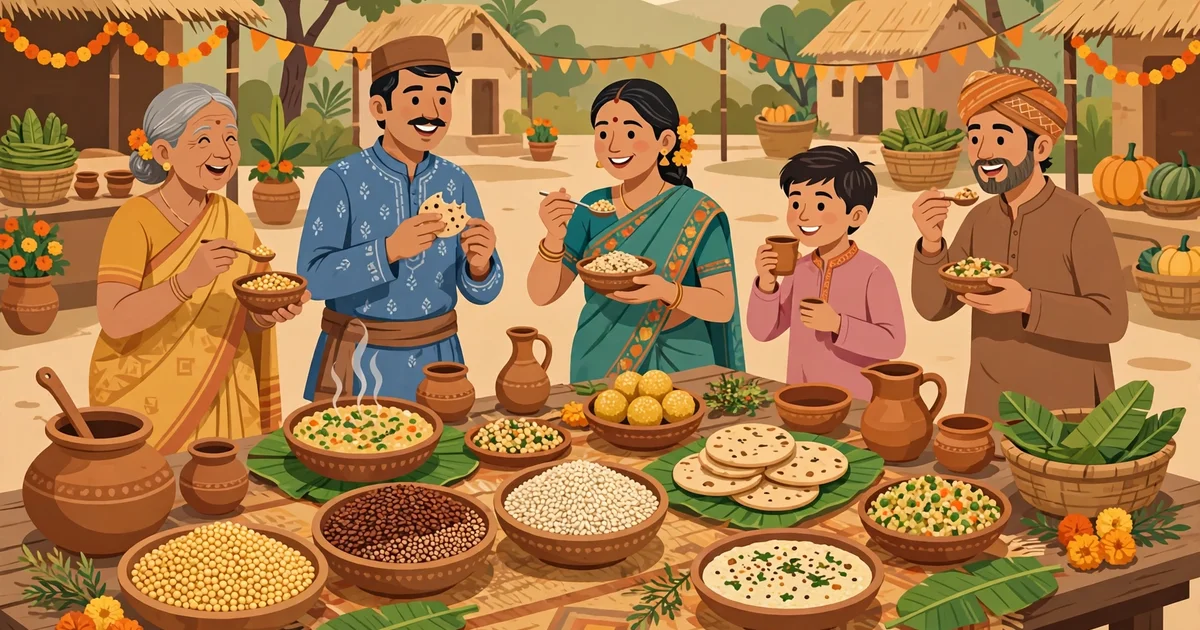
Millet food festivals are among the most popular CBEs — celebrating bajra, jowar, ragi, and foxtail millet while teaching nutrition. Here’s how to run one:
- Theme it: “Shree Anna” (the honourable grain) — millets’ official spotlight name.
- Cook together: invite mothers to prepare millet dishes — ragi porridge, bajra khichdi, jowar rotis, millet laddus.
- Taste and judge: a friendly contest for the tastiest millet dish.
- Teach the why: explain that millets are rich in iron, calcium, and fibre — and need less water to grow.
- Send recipes home: a handwritten card carries the lessons to family kitchens.
How Do You Involve Men and Youth?
Events often draw only women — but men control food budgets and youth shape future norms. Deliberate inclusion changes the dynamic:
- Invite men specifically: address invitations to husbands and fathers.
- Schedule for them: an evening chaupal after farm work reaches men daytime events miss.
- Give them roles: men as quiz masters, youth as photographers and performers.
- Use their channels: youth clubs, sports groups, festival committees.
- Talk their language: frame nutrition as strength, productivity, and children’s future — not just “women’s issues.”
- Celebrate male champions: appreciate fathers who ensure wives rest and eat well.
What Are Common CBE Mistakes to Avoid?
- Same faces every time: if only regulars attend, do door-to-door invites for the next event.
- Lecture mode: an hour of talking loses everyone; demonstrations, games, and food keep attention.
- No follow-up: an anaemia-themed event without haemoglobin screening or IFA distribution wastes the momentum.
- Skipping documentation: unlogged events don’t count toward targets.
- Ignoring feedback: ask attendees what they want next time — the best themes come from the audience.
How Do You Measure Whether an Event Worked?
Simple indicators tell you more than attendance headcounts:
- Did new families attend — not just the regulars?
- Were services delivered on the spot (IFA given, children weighed, rations distributed)?
- Can attendees repeat the key message a week later? Ask a few.
- Did behaviour visibly change — more mothers bringing children for weighing?
- Was the event logged in Poshan Tracker with photos the same day?
Note: CBEs are awareness and service-delivery platforms; health concerns raised at events should always be referred to qualified medical staff for proper assessment.
Community-Based Events Poshan: Planning Themes for the Whole Year
Plan themes across the calendar. The Jan Andolan dashboard at poshanabhiyaan.gov.in lists national themes to adapt locally:
- January–March: anaemia prevention, deworming, Poshan Pakhwada activities.
- April–June: summer feeding, hygiene and safe water, diarrhoea prevention.
- July–August: breastfeeding week, complementary feeding demos.
- September: Poshan Maah — the big month; plan your most ambitious events.
- October–December: post-harvest millet festivals, winter nutrition, growth drives.
FAQs
How many Community-Based Events must a centre organize monthly?
At least two CBEs per month are expected from every Anganwadi centre, each supported by a budget of ₹250.
What is the budget for each CBE?
₹250 per event, typically spent on refreshments, demonstration foods, small prizes, and decorations — often supplemented by community contributions.
What is VHSND?
Village Health Sanitation and Nutrition Day: a monthly event where the ANM, ASHA, and Anganwadi worker together provide immunization, check-ups, growth monitoring, and counselling.
Can men attend Community-Based Events?
Absolutely — and they should. Events are for the whole community; specific outreach like evening meetings helps bring men and youth in.
How are CBEs recorded?
Workers log each event in Poshan Tracker — date, theme, attendance, photographs — usually the same day.
Conclusion
Community-Based Events are where Poshan Abhiyaan becomes a people’s movement — two gatherings a month, ₹250 each, and a village slowly changing how it feeds its children. Plan around local needs, demonstrate rather than lecture, bring men and youth in, log every event honestly. Month after month, your centre becomes the village’s favourite place to learn.
👉 Celebrate nutrition every day: use the free Poshan Calculator for quick WHO-based growth checks between events.