
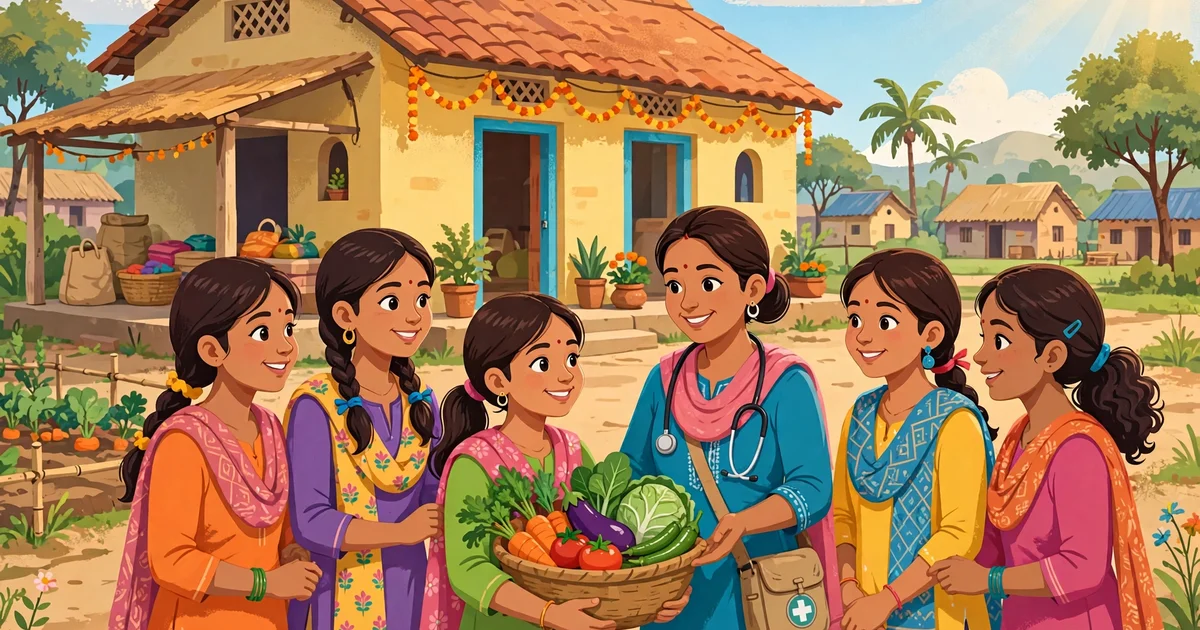
The simple answer is: yes — Poshan Tracker Adolescent Girls coverage includes out-of-school girls, with special focus on Aspirational Districts and North-Eastern states. Enrollment happens at the local Anganwadi centre, where the worker registers the girl in the app and links her to supplementary nutrition, IFA supplementation, and health check-ups. Parents, workers, or the girls themselves can start by simply visiting the nearest centre.
Adolescence (roughly 10–19) is life’s second-fastest growth period after infancy, and anaemia among adolescent girls remains one of India’s toughest nutrition challenges. Poshan Tracker — the Government of India’s official nutrition-monitoring app used by Anganwadi workers under Poshan Abhiyaan (the Prime Minister’s Overarching Scheme for Holistic Nourishment) — includes a dedicated workflow to find, register, and serve these girls.
👉 Good nutrition starts with knowing where you stand — try our free Poshan Calculator for WHO (World Health Organization) based growth checks, no download needed.
In this article, you will understand:
- Which adolescent girls are covered under the programme and its special focus areas
- What services enrolled girls receive through the Anganwadi system
- How enrollment works step by step in Poshan Tracker
- How workers can find and retain out-of-school and hard-to-reach girls
Who Is Covered Under Poshan Tracker Adolescent Girls Services?
Coverage focuses on girls aged 14–18 under the Scheme for Adolescent Girls, implemented through Anganwadi centres: nutrition support for all eligible girls, plus additional services for out-of-school girls.
Special attention goes to Aspirational Districts — identified for focused development — and North-Eastern states, where nutrition access has historically been weaker: reach the girls the system misses most easily.
Bottom line: if she is an adolescent girl in the coverage age group, she is eligible — in school or out of school, in any state.
Why Do Adolescent Girls Need Special Nutrition Attention?
Adolescence is a second window for growth — girls gain up to half their adult weight here, while menstruation sharply increases iron needs. Poor nutrition now leads to:
- Anaemia: low haemoglobin causing fatigue, poor concentration, and weak immunity.
- Stunting carried forward: undernourished girls become undernourished mothers, continuing an intergenerational cycle.
- Weak learning: iron deficiency directly affects memory and school performance.
- Early pregnancy risks: undernourished adolescents face far higher risks if they become mothers young.
Investing in a teenage girl’s nutrition pays dividends for two generations — hers, and her future children’s.
What Services Do Enrolled Girls Receive?
Once registered, a girl is linked to services delivered through the Anganwadi centre:
- Supplementary nutrition: take-home ration (THR) providing calories, protein, and micronutrients.
- IFA supplementation: weekly iron and folic acid tablets to fight anaemia, with counselling on correct use.
- Health check-ups: periodic screening including haemoglobin estimation and growth assessment.
- Deworming: albendazole tablets as per schedule, since worms are a major cause of anaemia.
- Nutrition and health education: sessions on diet, hygiene, menstrual health, and life skills — especially for out-of-school girls.
- Referrals: severely anaemic girls are referred to health facilities for treatment.
How Does Enrollment Work Step by Step?
The Anganwadi worker handles enrollment through the Poshan Tracker app:
- The worker identifies eligible adolescent girls in her area through household surveys and community contacts.
- The girl visits the Anganwadi centre (with a parent or guardian if needed), or the worker registers her during a home visit.
- The worker opens beneficiary registration, selects the adolescent girl category, and enters name, age, address, and school-going or out-of-school status.
- Baseline information is recorded — height, weight, and haemoglobin where screening is available.
- The girl is linked to the centre’s service schedule: THR distribution days, IFA distribution, and education sessions.
- The record syncs to the server, and the girl appears in the centre’s adolescent list for ongoing tracking.
Only basic identity details are typically needed — the worker guides families through local requirements.
How Are Out-of-School Girls Found and Enrolled?
Out-of-school girls are the hardest to reach and the most in need. Workers use several strategies:
- Household surveys: the annual or periodic survey lists every adolescent in the area, flagging those not in school.
- Community informants: ASHA (Accredited Social Health Activist) workers, self-help groups, and neighbours help identify girls who stay home.
- Home visits: personal visits to families, explaining the scheme’s benefits to parents who may be hesitant.
- Peer outreach: enrolled girls bring friends — the most trusted channel of all.
- Community events: Kishori Diwas and similar gatherings create a welcoming entry point.
What Is Special About Aspirational Districts and North-Eastern States?
Aspirational Districts are selected for rapid, focused development across health, nutrition, education, and infrastructure — and the scheme concentrates extra effort here because nutrition indicators lag behind national averages.
In North-Eastern states, the scheme adapts to hilly terrain, dispersed habitations, distinct food cultures, and language diversity — for example, promoting iron-rich local greens and traditional foods rather than unfamiliar menus.
Bottom line: the scheme goes where the need is greatest, and adapts to how people there actually live and eat.
How Does the App Track Services for Each Girl?
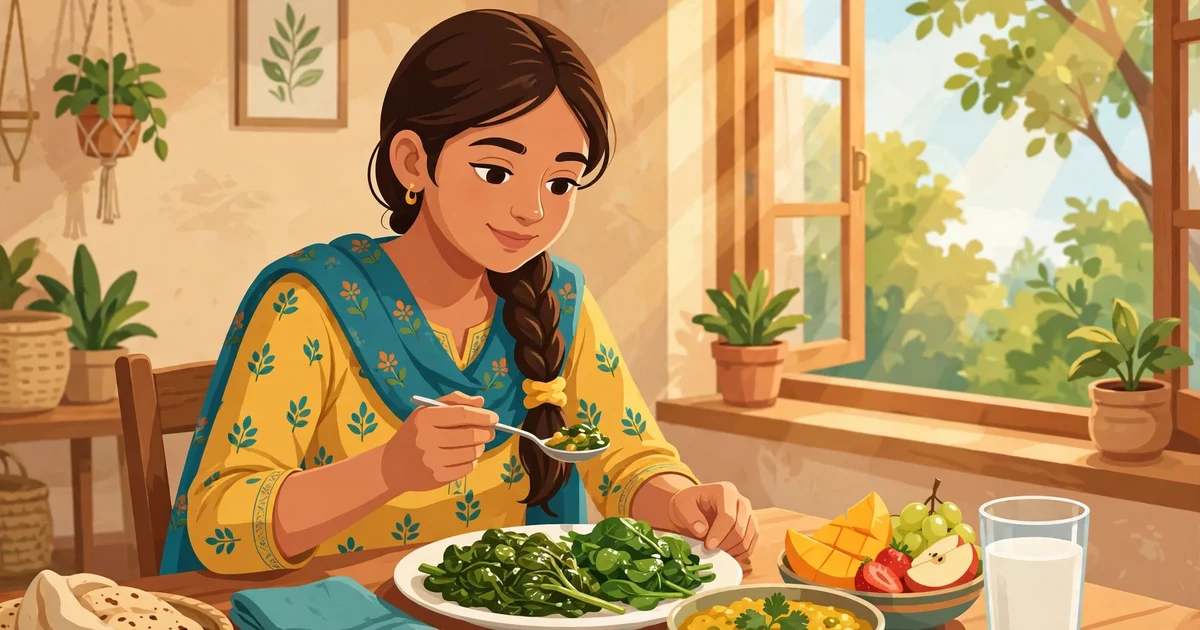
After enrollment, Poshan Tracker keeps a service record for every girl:
- Monthly THR distribution marked against her profile.
- Weekly IFA tablet distribution and consumption follow-up.
- Growth measurements (height, weight) plotted periodically.
- Haemoglobin readings where screening camps are held.
- Attendance at nutrition education sessions.
Supervisors see coverage gaps — girls enrolled but not collecting rations — and direct follow-ups. Data turns invisible dropouts into visible to-dos.
Enrolled vs Not Enrolled: What Difference Does It Make?
| Aspect | Enrolled girl | Girl not enrolled |
|---|---|---|
| Supplementary nutrition | Monthly take-home ration | Depends entirely on household diet |
| Anaemia prevention | Weekly IFA + deworming + screening | No systematic supplementation |
| Growth monitoring | Periodic height/weight tracking | Problems detected late, if at all |
| Nutrition education | Regular sessions at the centre | Missed learning on diet and health |
| Referral support | Fast-tracked to health facility | Family navigates the system alone |
👉 Key takeaway: enrollment costs the family nothing but unlocks a full package of nutrition, screening, and support — the gap between enrolled and missed is entirely avoidable.
What Role Do Families Play in Enrollment?
Workers register; families decide engagement. Parents can help by:
- Bringing daughters to the centre for registration.
- Ensuring she collects her take-home ration and takes IFA tablets weekly.
- Allowing her to attend education sessions — they build confidence too.
- Watching for signs of anaemia: unusual tiredness, pale skin, difficulty concentrating.
- Updating the worker if the family migrates, so records can follow.
And girls: your health is your strength. The weekly tablet, the ration, the sessions — an investment no one can take from you.
What Challenges Do Workers Face in Reaching Girls?
Honest coverage means naming the obstacles:
- Social hesitation: some families restrict adolescent girls’ movement outside the home.
- Migration: families moving for work break the service chain.
- Tablet fatigue: girls stop taking IFA when no one follows up on side effects or doubts.
- Stigma: anaemia or undernutrition labels can embarrass families.
- Worker workload: adolescent services compete with the demands of small children and pregnant women.
Disclaimer: anaemia screening in the programme is a first-level check; confirmed diagnosis and treatment come from a doctor or health facility.
How Can Communities Celebrate Adolescent Nutrition?
Centres that celebrate their Kishoris see better retention:
- Hold Kishori Diwas events with health check-ups, games, and nutrition quizzes.
- Publicly appreciate girls who complete six months of regular IFA.
- Invite older girls as peer mentors for newly enrolled ones.
- Link nutrition themes to Poshan Maah (Nutrition Month, every September) activities.
- Display charts showing group progress — anaemia down, attendance up.
For background on the national mission behind these efforts, visit the official portal at poshanabhiyaan.gov.in.
FAQs
Who can enroll in the adolescent girls’ scheme?
Girls in the 14–18 year age group are covered, including out-of-school girls, with special focus on Aspirational Districts and North-Eastern states.
How do I enroll my daughter?
Visit your nearest Anganwadi centre — the worker will register her in Poshan Tracker with basic details and link her to rations, IFA tablets, and check-ups.
Is there any fee for enrollment?
No — registration, nutrition, IFA, deworming, and education sessions are all free.
What if my daughter is in school — is she still eligible?
Yes. Both school-going and out-of-school girls in the eligible age group are covered; out-of-school girls additionally receive nutrition and life-skills education.
How often are health check-ups done?
Periodic growth and haemoglobin screening happens at the centre or through health camps, per local schedules.
Conclusion
This coverage exists so no teenage girl is left behind — in school or out, in a metro or a remote North-Eastern village. Enrollment is free: visit the Anganwadi centre, get registered, and receive rations, weekly IFA, deworming, check-ups, and life-skills education. Workers: find every eligible girl, enroll her, follow up until anaemia loosens its grip. A nourished adolescent today is a healthy mother tomorrow.
👉 Start building nutrition awareness at home today with the free Poshan Calculator — WHO-based growth checks for the whole family.