
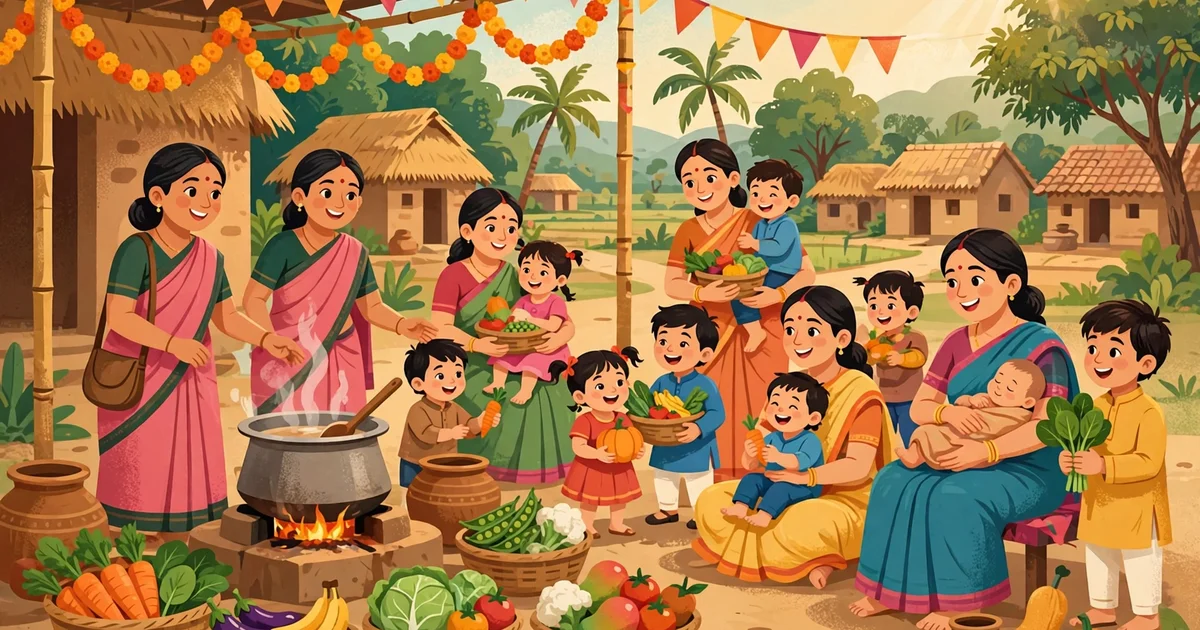
The simple answer is: Poshan Maah is India’s National Nutrition Month, celebrated every September to raise awareness about healthy eating and to fight malnutrition among children, pregnant women, and mothers. It is the biggest annual campaign of Poshan Abhiyaan, India’s national nutrition mission.
During Poshan Maah, Anganwadi centres, schools, and families organise rallies, cooking demos, and growth-monitoring camps. The 9th edition launched on 9 September 2026 with the theme “Hamari Anganwadi, Hamari Jimmedari” — Our Anganwadi, Our Responsibility.
👉 While communities celebrate, you can check your own child’s nutrition any day with the free Poshan Calculator — it compares your child’s growth with World Health Organization (WHO — the global agency that sets child-growth standards) benchmarks in under two minutes.
In this article, you will understand:
- What Poshan Maah is and why it happens every September
- The 2026 theme, activities, and who takes part
- How Poshan Maah differs from Poshan Pakhwada and Nutrition Week
- What your family can do during the month
What is Poshan Maah? A Simple Definition
Poshan Maah (पोषण माह) literally means “Nutrition Month.” It is a month-long national campaign, observed every September since 2018, that turns nutrition into a public celebration. The idea is simple: when an entire village talks about healthy food for thirty days, families remember the message long after the month ends.
It is the Jan Andolan (people’s movement) arm of Poshan Abhiyaan — the belief that communities must own the fight against malnutrition. Anganwadi workers, ASHAs (Accredited Social Health Activists — village health workers), schools, and self-help groups organise activities together.
Takeaway: Poshan Maah = one month, every September, when all of India talks about nutrition.
Why Does the Celebration Happen in September?
September was chosen because it also hosts National Nutrition Week (1–7 September), a campaign India has observed since 1982. Placing Poshan Maah in the same month creates a powerful opening week: the country starts September talking about nutrition and keeps the momentum going all month.
September is also practical — the harvest season brings fresh produce, the perfect time to talk about dietary diversity and kitchen gardens.
Takeaway: September pairs a 40-year-old nutrition week with a month-long people’s movement.
How Did the Campaign Begin? The Story Since 2018
Poshan Maah began in September 2018, a few months after Poshan Abhiyaan itself launched in March 2018. The first edition focused on spreading the mission’s message to every village. Each year since, the campaign has grown — more activities, more districts, more themes.
The 2026 edition — the 9th Poshan Maah — logged more than 10.69 crore activities on the national Jan Andolan dashboard, with 785 of 788 districts participating.
Takeaway: What started in 2018 is now one of the world’s largest annual nutrition campaigns.
What was the Theme for 2026?
The 2026 theme was “Hamari Anganwadi, Hamari Jimmedari” — “Our Anganwadi, Our Responsibility.” It asked communities to take ownership of their local Anganwadi centre instead of treating it as just a government office.
Activities highlighted dietary diversity and protein, hot cooked meals at centres, community ownership, and the nutrition-learning link. The message: a child’s growth is the whole village’s responsibility.
Takeaway: The 2026 theme made one point clear — nutrition is everyone’s job, not just the government’s.
What Activities Happen During the Month?
Poshan Maah is not a single event but thousands of local activities. Common ones include:
- Rallies and prabhat pheris — morning processions with nutrition slogans
- Cooking demonstrations — showing how to make nutritious meals from local ingredients
- Growth-monitoring camps — weighing and measuring children at Anganwadi centres
- Poshan Panchayats — village meetings on nutrition with local leaders
- Poshan Vatika drives — planting nutrition gardens at centres and homes
- Quiz, painting, and recipe competitions for schoolchildren
- Home visits by Anganwadi workers to counsel pregnant women and new mothers
Takeaway: There is an activity for every age group — from babies’ first-food ceremonies to cooking contests.
Who Takes Part in the Celebrations?
Everyone. That is the whole point of a Jan Andolan. The participants include:
- Anganwadi workers and helpers — who anchor activities at the centre
- ASHAs and ANMs (Auxiliary Nurse Midwives) — who connect health and nutrition
- Mothers, fathers, and caregivers — the primary audience and the real change-makers
- Self-help groups, panchayats, and schools — who spread the message street by street
👉 You do not need an invitation to join — just visit your Anganwadi centre in September and ask what is planned. And any month of the year, you can monitor your child’s growth with the free Poshan Calculator.
Takeaway: Poshan Maah belongs to the community — showing up is participating.
What was the Role of Anganwadi Workers in 2026?
Anganwadi workers are the face of Poshan Maah in every village. They plan the month’s calendar, organise mothers’ meetings, conduct growth-monitoring sessions, and record every activity in the Poshan Tracker app so it counts toward the national dashboard.
In 2026, their work produced the national totals: over 2.5 crore activities each for diet diversity and hot cooked meals, 2.4 crore for community ownership, and 2.1 crore for early childhood development.
Takeaway: The national dashboard is built one Anganwadi worker’s efforts at a time.
How is the Month Different from Poshan Pakhwada?
People often confuse the two campaigns. Here is the clear difference:
| Poshan Maah | Poshan Pakhwada | |
|---|---|---|
| Meaning | Nutrition Month | Nutrition Fortnight |
| Duration | Full month (30 days) | Two weeks (15 days) |
| When | Every September | Usually March–April (2026: 9–23 April) |
| 2026 theme | “Hamari Anganwadi, Hamari Jimmedari” | “Maximising brain development in the first six years” |
| Focus | Broad: diet diversity, protein, community ownership | Focused: early childhood care and brain development |
| Since | 2018 (9th edition in 2026) | 2019 (8th edition in 2026) |
👉 Think of it this way: Poshan Maah is the big annual festival of nutrition; Poshan Pakhwada is the focused spring drive. Both feed the same mission — and both are great moments to check your child’s growth with the free Poshan Calculator.
What Can Parents and Families Do During the Month?
You do not need to be a health worker to take part. Work through these simple actions in order:
- Get your child weighed and measured at the Anganwadi centre’s growth-monitoring camp.
- Attend a cooking demonstration and try one new nutritious recipe at home.
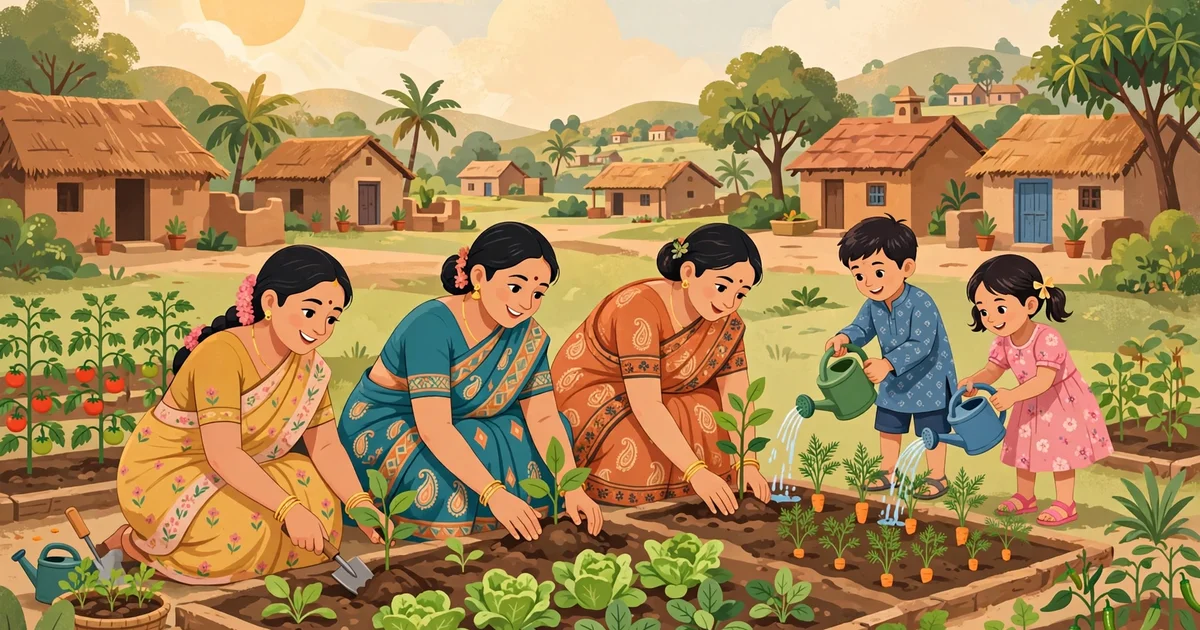
- Start a small kitchen garden — even a few pots of greens count as a Poshan Vatika.
- Take the nutrition pledge many centres organise during the month.
Takeaway: One weighing, one recipe, one garden — small steps the whole family can take.
How is the Campaign Tracked? The Numbers Behind 2026
Every activity is uploaded to the national Jan Andolan dashboard. For 2026, it showed:
- 10.69 crore+ activities logged since 9 September 2026
- 785 of 788 districts reporting — near-universal participation
- 2.52 crore activities on dietary diversity and adequate protein
- 2.50 crore on fresh hot cooked meals at Anganwadi centres
These numbers turn a “campaign” into measurable action — the government can see which themes and districts need more support next year.
Takeaway: Poshan Maah is not just celebrated; it is counted, district by district.
How Does the Month Connect to National Nutrition Week?
National Nutrition Week (1–7 September), launched in 1982, is India’s oldest nutrition campaign. Poshan Maah (since 2018) absorbed it as its high-energy opening week.
Together they create a powerful sequence: a focused week of education, followed by three more weeks of community action. If you only remember one date, remember September — the month when India thinks hardest about what its children eat. More background on the national campaign is available in this PIB backgrounder on Poshan Maah 2026.
Takeaway: Nutrition Week opens the innings; Poshan Maah plays the full month.
FAQs
What is Poshan Maah?
Poshan Maah is India’s National Nutrition Month, observed every September since 2018 as the biggest annual campaign of Poshan Abhiyaan.
Which month is Poshan Maah celebrated?
September, every year. The 9th edition in 2026 was launched on 9 September.
What was the theme of Poshan Maah 2026?
“Hamari Anganwadi, Hamari Jimmedari” (Our Anganwadi, Our Responsibility), focused on community ownership of nutrition.
What is the difference between Poshan Maah and Poshan Pakhwada?
Poshan Maah is a full month every September; Poshan Pakhwada is a two-week campaign usually in March–April with a narrower theme.
How can I participate in Poshan Maah?
Visit your Anganwadi centre in September for growth-monitoring camps, cooking demos, and pledge events — and track your child’s growth year-round with the free Poshan Calculator.
Conclusion
So, what is Poshan Maah? India’s promise, renewed every September, that nutrition deserves a month of the nation’s full attention. From 2018 to the 9th edition in 2026, it has become a true people’s movement for child health.
But the spirit of Poshan Maah should not end on 30 September. Keep the habits alive: diverse meals, regular growth checks, and an active kitchen garden.
👉 Start now: open the free Poshan Calculator, check your child’s growth against WHO standards, and carry the mission forward all year.