

The simple answer is: Poshan Pakhwada 2026 is the 8th edition of India’s fortnight-long nutrition campaign, held from 9 to 23 April 2026, with the theme “Maximizing Brain Development in the First Six Years of Life.” For two weeks, Anganwadi workers, ASHAs, schools, and communities across India organise activities on maternal-child nutrition, early stimulation, and play-based learning — and every activity is reported in Poshan Tracker.
Poshan Pakhwada (literally “nutrition fortnight”) is one of the two flagship mass campaigns under Poshan Abhiyaan, the Government of India’s overarching nutrition mission launched in 2018. The Poshan Pakhwada 2026 edition was launched on 9 April 2026 at Vigyan Bhavan, New Delhi, by Union Women and Child Development Minister Annpurna Devi, with over 4.2 lakh stakeholders joining the inaugural webcast.
👉 Join the nutrition movement at home too — check your child’s growth with the free Poshan Calculator, using the same WHO standards as Poshan Tracker.
In this article, you will understand:
- The 2026 theme, dates, and why brain development is this year’s focus
- The activity checklist for Anganwadi workers and supervisors during the fortnight
- How participation is logged and reported in Poshan Tracker
- How parents and communities can take part
What Is Poshan Pakhwada?
Poshan Pakhwada is a nationwide, fortnight-long campaign observed every year to turn nutrition into a Jan Andolan (people’s movement). Unlike routine Anganwadi services, the Pakhwada concentrates energy: every centre, school, panchayat, and health worker runs awareness activities at the same time, creating visible momentum. Since Poshan Abhiyaan began in 2018, the programme has driven over 150 crore sensitisation activities and more than 9.8 crore community-based events.
Key Dates and Edition Details for 2026
- Edition: 8th Poshan Pakhwada
- Dates: 9 April to 23 April 2026
- Organised by: Ministry of Women and Child Development, under Mission Poshan 2.0
- Theme: “Maximizing Brain Development in the First Six Years of Life”
- National launch: 9 April 2026, 3–4 pm, Vigyan Bhavan, New Delhi
The official announcement is available in this Press Information Bureau release.
Why the 2026 Theme Focuses on Brain Development
This year’s theme recognises that the first 1,000 days — and indeed the first six years — are critical for brain development, physical growth, and overall well-being. Scientific evidence cited by the Ministry indicates that over 85% of brain development occurs by the age of six. Good nutrition alone is not enough: responsive caregiving, early stimulation, and play-based learning shape how a child’s brain wires itself. The 2026 Pakhwada therefore expands the agenda beyond food to how parents talk, play, and interact with young children.
The Three Focus Areas Explained
Maternal and Child Nutrition
Promoting optimal nutrition during pregnancy, exclusive breastfeeding for the first six months, and timely, age-appropriate complementary feeding afterwards — the nutritional foundation the brain is built on.
Early Stimulation for Brain Development (0–3 Years)
Encouraging responsive caregiving: talking, singing, and cuddling babies; responding to their cues; and simple early-learning interactions during home visits.
Play-Based Education in Early Years (3–6 Years)
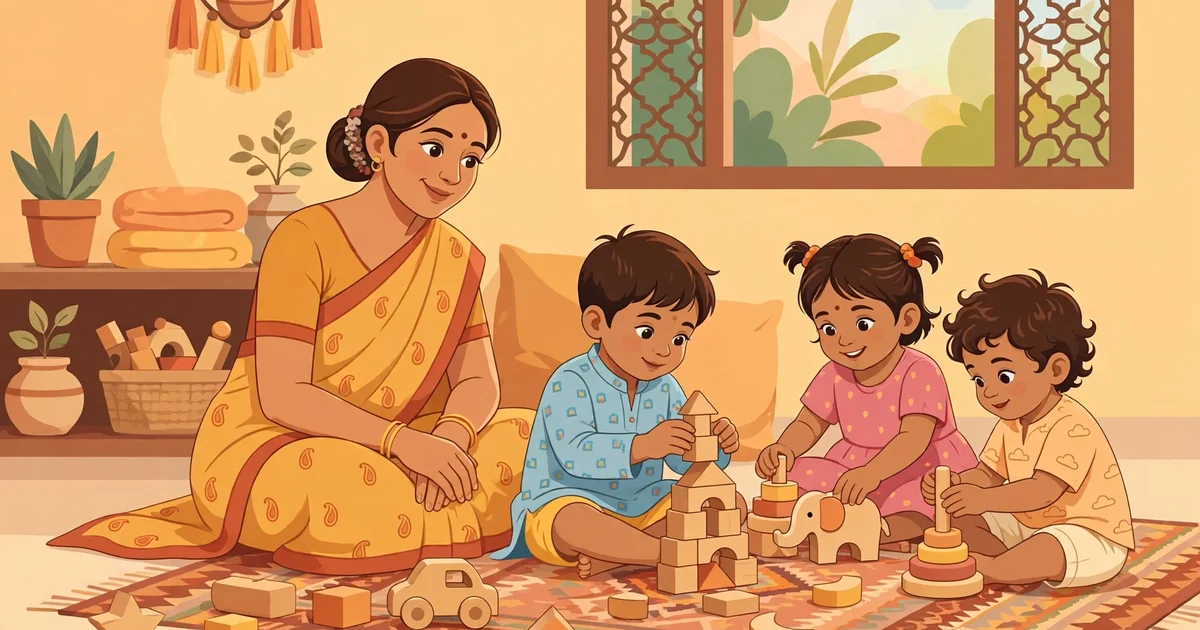
Supporting holistic development and school readiness through play rather than rote learning, alongside a push to minimise screen time and promote active engagement by parents.
Key takeaway: 2026 is about feeding the brain as well as the body — nutrition plus stimulation plus play.
Key Activities Checklist for the Fortnight
Anganwadi workers and supervisors typically organise the following during the Pakhwada:
- Home visits with counselling on maternal and child nutrition and responsive caregiving.
- Poshan Melas (nutrition fairs) with cooking demonstrations using local, affordable foods.
- Growth-monitoring drives — weighing and measuring children and plotting results.
- Demonstrations of early-learning methods for parents of 0–3 and 3–6 year-olds.
- Awareness sessions on reducing screen time and increasing parent-child interaction.
- Community events like Godh Bharai and Annaprashan Diwas tied to the theme.
- Upgrading Anganwadi centres through Jan Bhagidari (community participation) and CSR support.
Who Participates in Poshan Pakhwada?
The campaign mobilises the full grassroots network: Anganwadi Workers and Helpers, ASHAs, ANMs, supervisors, CDPOs, Self-Help Groups, panchayat members, school teachers, and parents. India’s 14 lakh Anganwadi Centres serve nearly 8.9 crore beneficiaries — pregnant women, lactating mothers, children, and adolescent girls — so the Pakhwada’s reach is enormous when every centre acts together.
How Poshan Pakhwada 2026 Activities Are Reported in Poshan Tracker
Every activity during the fortnight must be logged so progress can be tracked from block to national level. The reporting flow works like this:
- Activity entry: the Anganwadi worker records each activity — type, theme, date, and participation numbers — in the Poshan Tracker app or the Jan Andolan portal module.
- Daily limit: up to 10 activities per Anganwadi Centre can be reported per day.
- Geo-tagged evidence: photos of events are uploaded as proof of conduct.
- Supervisor verification: supervisors and CDPOs review entries on the admin dashboard for their area.
- Back-dated entries: during Poshan Pakhwada, entries can be back-dated up to 5 days — so log promptly and avoid last-day rushes.
👉 Supervisors: pair field monitoring with data — and remind parents to track growth on the free Poshan Calculator.
Reporting Deadlines and Data Entry Rules
- Log activities the same day wherever possible; network issues are the main cause of backlogs.
- Data entry is closed daily from 12 am to 5 am for system maintenance.
- Duplicate entries for the same activity, level, and date trigger warnings — coordinate within the village so two workers don’t log the same event.
- Higher-level dashboards (block, district, state) aggregate automatically, so accuracy at the centre level decides the quality of national figures.
Poshan Pakhwada vs Poshan Maah: What’s the Difference?
| Feature | Poshan Pakhwada | Poshan Maah |
|---|---|---|
| Duration | Fortnight (15 days) | Full month (September) |
| 2026 dates | 9–23 April 2026 | September 2026 |
| Focus | One annual theme (2026: brain development) | Rotating weekly themes |
| Intensity | Concentrated burst of activities | Sustained month-long drive |
👉 Key takeaway: Pakhwada is the sharp fortnight sprint; Poshan Maah is the month-long marathon. Both feed the same Jan Andolan.
Tips for Anganwadi Workers to Maximise Impact
- Plan the fortnight in advance with your supervisor — assign each day a theme and venue.
- Invite fathers and elders, not just mothers — brain development is a family project.
- Demonstrate, don’t lecture — a live play session teaches more than a speech.
- Use local foods in cooking demos so families can copy recipes at home.
- Photograph everything for Poshan Tracker reporting and village notice boards.
How Parents Can Join In
You don’t need to be a worker to be part of the Pakhwada. Attend your centre’s events, learn two or three play activities for your child’s age, cut down the family’s screen time during meals and play, and share what you learn with neighbours. Small daily habits — talking to your baby, reading a picture book, singing together — are exactly what the 2026 theme is about.
What Happens After the Pakhwada Ends?
The fortnight ends, but the habits should not. Centres compile their reports, districts rank participation, and best practices from states are showcased nationally. The real test is whether home visits, play-based learning, and growth monitoring continue at full energy through the year — the Pakhwada is a launchpad, not a finish line.
FAQs
When is Poshan Pakhwada 2026?
From 9 April to 23 April 2026 — the 8th edition of the fortnight-long campaign.
What is the theme of Poshan Pakhwada 2026?
“Maximizing Brain Development in the First Six Years of Life,” focusing on the first 1,000 days, responsive caregiving, and play-based learning.
How are activities reported?
Anganwadi workers log each activity with photos in Poshan Tracker (up to 10 per centre per day), verified by supervisors and CDPOs on dashboards.
Who can participate?
Everyone — Anganwadi staff, ASHAs, ANMs, SHGs, panchayats, teachers, and parents. It is designed as a people’s movement.
What is the difference between Poshan Pakhwada and Poshan Maah?
Pakhwada is a 15-day themed sprint (April); Poshan Maah is a month-long drive every September with rotating weekly themes.
Conclusion
Poshan Pakhwada 2026 puts the spotlight where science says it belongs: the first six years, when over 85% of brain development happens. From 9 to 23 April, the country’s 14 lakh Anganwadi centres become stages for nutrition counselling, play demonstrations, and community action — all logged in Poshan Tracker for the nation to see. Join your local events, adopt the habits at home, and keep the momentum going all year.
👉 Start today: check your child’s growth on the free Poshan Calculator and bring the result to your Anganwadi centre.