
The simple answer is: Poshan 2.0 — formally Mission Saksham Anganwadi and Poshan 2.0 — merged Anganwadi services, Poshan Abhiyaan, and the Scheme for Adolescent Girls into one umbrella mission with new nutrition norms, upgraded “Saksham” centres, and deeper digital tracking. For Anganwadi workers, it means better infrastructure, revised feeding rules, and clearer responsibilities.
If you’ve worked as an Anganwadi worker for years, you’ve seen many scheme names come and go. This one is structural — a merger, not a rename. Knowing what actually changed will save you daily confusion.
In this article, you will understand:
- What Mission Saksham Anganwadi and Poshan 2.0 is and which schemes it merged
- What the Saksham Anganwadi centre upgrade includes
- How revised supplementary nutrition (SNP) norms change your feeding work
- What changed for adolescent girls, SAM children, and your daily routine
What Is the New Saksham Anganwadi Mission?
Mission Saksham Anganwadi and Poshan 2.0 — usually Mission Poshan 2.0 — is a Centrally Sponsored Mission of the Ministry of Women and Child Development (WCD). It subsumes three programmes: Anganwadi Services (the ICDS — Integrated Child Development Services — network), Poshan Abhiyaan (National Nutrition Mission, 2018), and the Scheme for Adolescent Girls.
It covers children under 6, pregnant women, lactating mothers, and adolescent girls 14–18 in Aspirational Districts and the North-East, implemented by States and UTs. Read the PIB press release on Mission Saksham Anganwadi and Poshan 2.0. The bottom line: three schemes, one mission, one set of rules.
What Got Subsumed Under One Mission?
- Anganwadi Services (ICDS): supplementary nutrition, pre-school education, growth monitoring, immunisation referrals, health linkages — continuing under one framework.
- Poshan Abhiyaan: its Jan Andolan campaigns — Poshan Maah (September) and Poshan Pakhwada (March–April) — continue as the community-mobilisation engine.
- Scheme for Adolescent Girls: revised to target girls 14–18 in Aspirational Districts and North-Eastern states (earlier: out-of-school girls 11–14).
Practical effect: one mission, one reporting system (Poshan Tracker), one set of supervision visits. The bottom line: less duplicated paperwork.
What Is Poshan 2.0 Changing for Anganwadi Workers?
Five concrete changes. One: your centre may be upgraded — two lakh centres approved as Saksham Anganwadis with modern infrastructure. Two: nutrition norms rewritten — old calorie-only rules replaced by diet-diversity norms with defined protein and micronutrients. Three: hot cooked meals formally recognised, with mandatory SNP menu boards. Four: adolescent services refocused on ages 14–18. Five: deeper digital tracking — Poshan Tracker in 24 languages, connecting 14+ lakh centres and 8.9 crore beneficiaries (January 2026).
Your core identity is unchanged: the community’s trusted didi for nutrition, health, and early learning. 👉 Support growth-monitoring duties with the free online Poshan calculator — quick WHO-based checks. The bottom line: better building, better food rules, sharper focus, deeper digital tracking.
Saksham Anganwadis: What the Upgrade Means
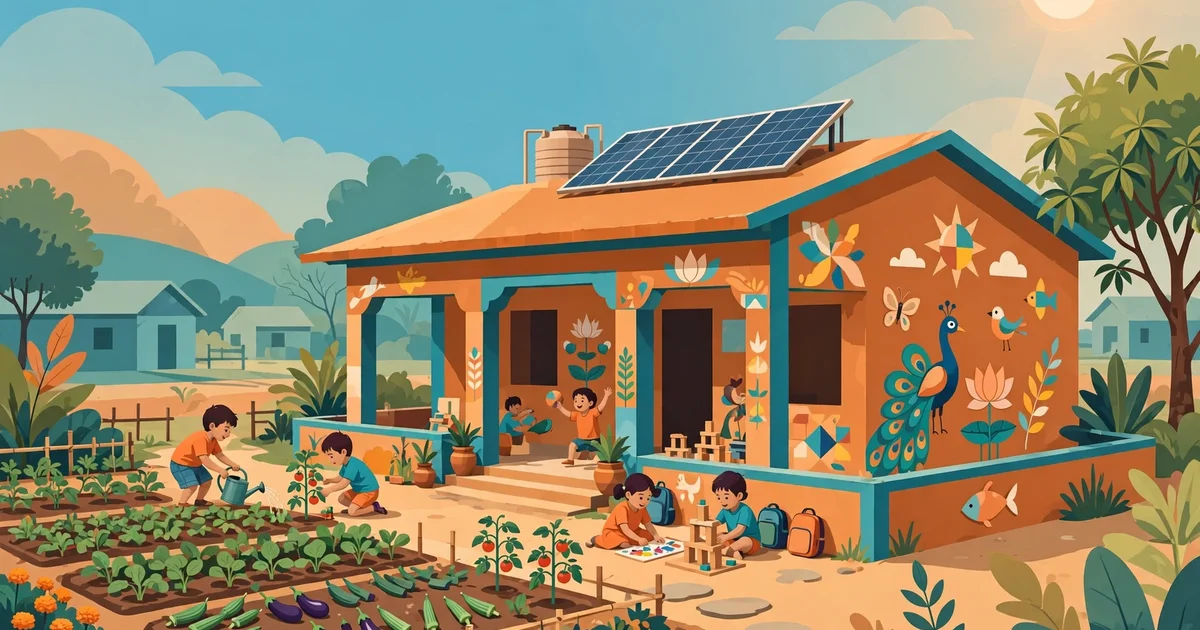
A “Saksham” (capable) Anganwadi is a modernised centre — two lakh approved for upgradation. Selected centres get digital infrastructure (internet, LED screens), safe water (purifier/RO), learning material (ECCE kits, BaLA wall paintings), and a Poshan Vatika (nutrition garden).
Upgraded centres must deliver improved nutrition and stronger early learning for 3–6-year-olds — creative, social, emotional, and cognitive development, not just food. The bottom line: if your centre is selected, prepare for a bigger early-learning role.
Revised SNP Norms: What Changed
Supplementary Nutrition follows norms in Schedule-II of the National Food Security Act, 2013 — revised in January 2023. The old norms were largely calorie-specific; the new ones define quality protein, healthy fats, and micronutrients (calcium, zinc, iron, folate, vitamins A, B6, B12) on the principle of diet diversity.
Current entitlements: children 6 months–6 years get 500 kcal + 12–15 g protein/day; severely malnourished children 800 kcal + 20–25 g protein/day plus extra THR (Take-Home Ration) for SAM (Severe Acute Malnutrition); pregnant/lactating mothers 600 kcal + 18–20 g protein/day; covered adolescent girls 600 kcal + 18–20 g protein as fortified THR for 300 days/year. The bottom line: protein, fats, and micronutrients now define a compliant meal — not just calories.
Old Norms vs New Norms
| Aspect | Old Approach | Revised Norms (Poshan 2.0) |
|---|---|---|
| Focus | Mostly calorie targets | Calories + protein + fats + micronutrients |
| Principle | Quantity of food | Diet diversity and quality |
| Micronutrients | Not clearly specified | Calcium, zinc, iron, folate, vitamins A, B6, B12 |
| Hot cooked meals | Practised, undefined | Formally defined in guidelines |
| Transparency | Informal menus | Mandatory SNP menu boards |
👉 Key takeaway: the new norms judge meals by what’s in them, not just energy — plan menus for variety, not volume.
Hot Cooked Meals and SNP Menu Boards
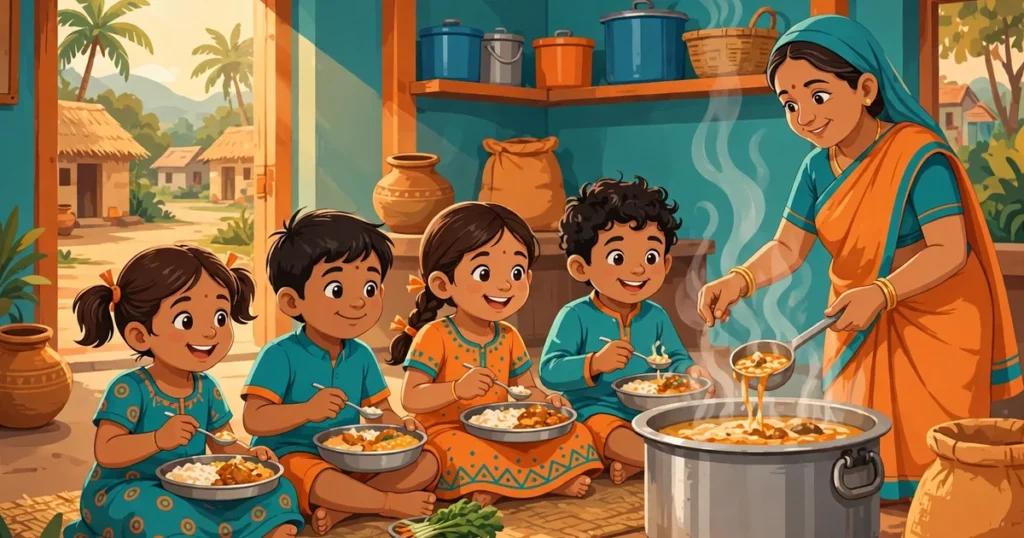
For the first time, guidelines define what a hot cooked meal should contain, ending years of ambiguity between cooked food and dry ration. And SNP menu boards are mandatory — mothers can see what children should receive, enabling community monitoring.
For you: plan weekly menus around diversity (cereals/millets, pulses, vegetables, fats), keep the board current (outdated boards draw audit questions), and use local seasonal foods — millets, groundnuts, greens — to meet norms affordably. The bottom line: defined meals on a public board — plan weekly, display honestly.
What Changed for Adolescent Girls
Coverage is now girls 14–18 in Aspirational Districts and North-Eastern states. In covered areas you provide: nutrition — fortified THR (600 kcal, 18–20 g protein, micronutrients) for 300 days/year, labelled for the girl so it reaches her; services — IFA (iron and folic acid), health check-ups and referrals, nutrition education, skilling; tracking — via Poshan Tracker with Aadhaar-based identification.
The logic is life-cycle: undernourished adolescents become undernourished mothers of low-birth-weight babies — breaking the cycle here pays for a generation. The bottom line: older girls, fortified THR, Aadhaar-tracked — know if your district is covered.
SAM Children: What the New Protocol Means
The WCD and Health Ministries jointly released a Protocol for Management of Malnutrition in Children for SAM (Severe Acute Malnutrition). For frontline workers:
- Timely detection: monthly WHO colour-code monitoring on Poshan Tracker — your measurements are the detection system.
- Community care: SAM without complications is managed at home with local nutritious foods plus extra THR, with your counselling.
- Referral: SAM with complications (infection, oedema, poor appetite) goes to health facilities — your referral can save a life.
MAM (Moderate Acute Malnutrition) needs intensified feeding and counselling so it doesn’t slip into SAM. The bottom line: detect monthly, manage uncomplicated SAM at home, refer complications fast.
Your Daily Routine Now
A typical Poshan 2.0 working day runs in this order:
- Morning: open the centre, mark attendance on Poshan Tracker, serve and record hot cooked meals or THR.
- Growth-monitoring days: measure with the app’s confirmation step (a verification prompt cutting data-entry errors); counsel mothers on colour codes.
- Weekly tasks: update the SNP menu board; conduct Community Based Events (two/month required); follow up SAM/MAM children.
- Campaign months: run Poshan Maah (September) and Poshan Pakhwada (March–April) activities with Jan Andolan entries.
- Ongoing: home visits, ASHA/ANM convergence, adolescent services, and pre-school education.
👉 Double-check a tricky reading with the free online Poshan calculator — a second opinion in seconds. The bottom line: same dedication, better tools, clearer norms, visible records.
How Poshan Tracker Supports the Mission
- One digital register: attendance, growth, THR, hot cooked meals, ECCE, home visits — in one app, replacing paper registers.
- Built-in WHO charts: measurements auto-convert to colour-coded nutrition status.
- Convergence data: RCH (Reproductive and Child Health) functionality for pregnant/lactating mothers is live; vaccination status flows from U-WIN.
- 24 languages and real-time supervision — 14.02 lakh centres, 8.9 crore beneficiaries (January 2026).
The bottom line: master Poshan Tracker and you master the mission’s paperwork.
FAQs
Is Poshan 2.0 the same as Poshan Abhiyaan?
Not exactly — Poshan Abhiyaan (2018) was subsumed into the larger Mission Saksham Anganwadi and Poshan 2.0, alongside Anganwadi Services and the Scheme for Adolescent Girls.
What is a Saksham Anganwadi?
An upgraded centre with internet, LED screens, safe water, ECCE material, BaLA paintings, and a Poshan Vatika — two lakh centres approved for upgradation.
What are the new SNP norms in simple terms?
Meals must provide defined protein, healthy fats, and micronutrients based on diet diversity — not just calories. Hot cooked meals are defined; menu boards mandatory.
Do SAM children get extra THR?
Yes — extra Take-Home Ration is provided specifically for SAM children, with community-based management and referral for complicated cases.
Which adolescent girls are covered?
Girls 14–18 in Aspirational Districts and North-Eastern states: fortified THR 300 days/year plus IFA, check-ups, and skilling.
Conclusion
Poshan 2.0 is a genuine restructuring: three schemes merged, two lakh centres modernising, nutrition norms rewritten around diet diversity, hot cooked meals formalised, adolescent services refocused, and Poshan Tracker tying it together digitally.
Your edge remains the same: accurate measurements, honest entries, warm counselling, timely referrals. Learn the new norms, keep your menu board honest, and let the upgraded tools amplify your trusted work.
👉 Keep growth-monitoring sharp under Poshan 2.0 — use the free online Poshan calculator anytime.