
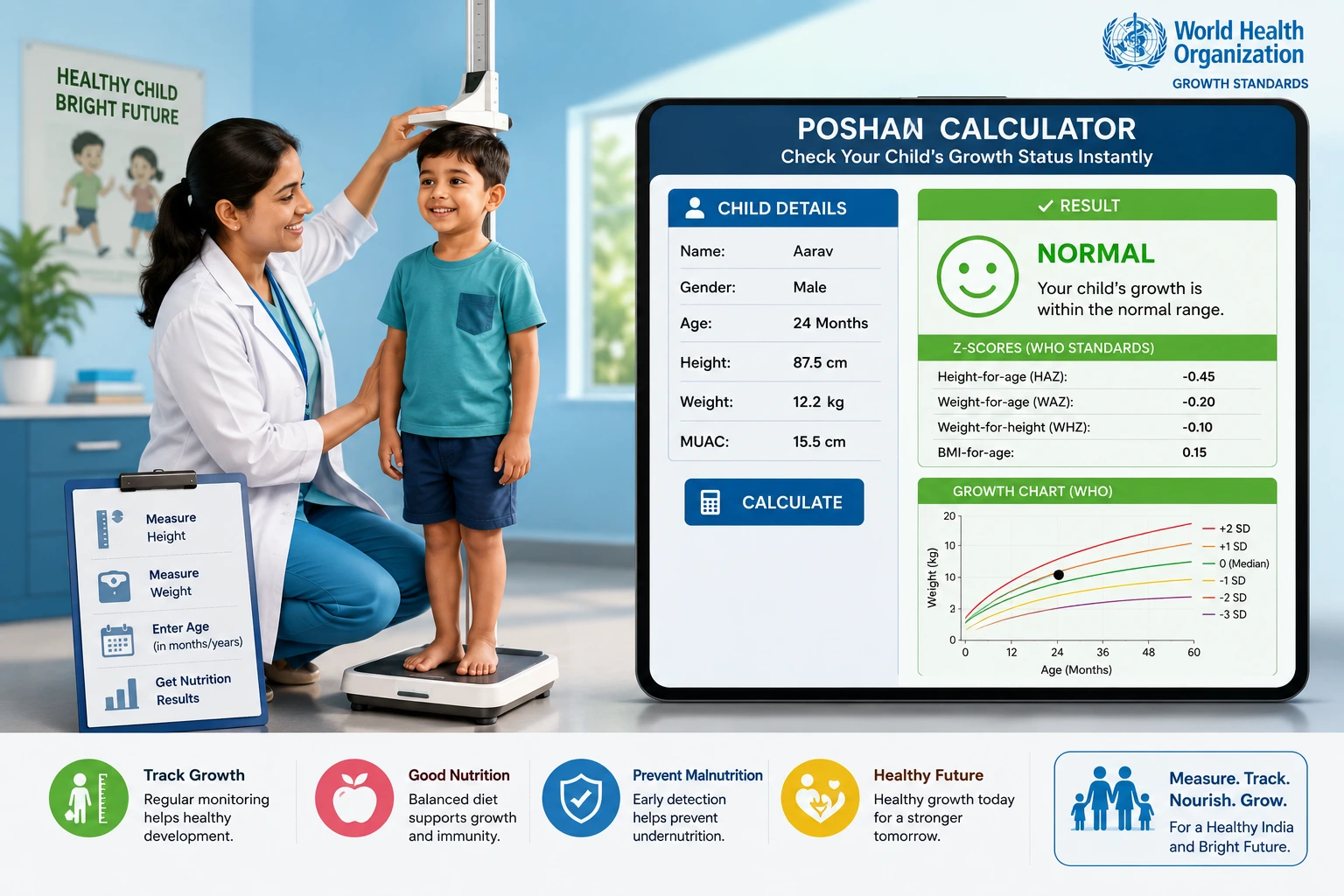
This page explains how the Poshan Calculator Height Weight Chart is used to assess a child’s growth based on WHO (World Health Organization) growth standards.
It helps compare a child’s height, weight, and age against globally accepted reference data to identify whether the child is growing normally, undernourished, or overweight.
Why height and weight charts are important for child nutrition
Height and weight charts are essential tools in child nutrition monitoring. They help detect early signs of malnutrition such as stunting (low height for age), wasting (low weight for height), and underweight conditions.
By tracking growth regularly, parents and health workers can take timely action to improve a child’s diet and overall health before problems become serious.
Who should use this page?
This page is useful for parents, caregivers, health workers, teachers, and anyone involved in child health monitoring.
It is especially important for children under the age of 5, where growth tracking is most critical. Public health workers and nutrition programs can also use this information to support screening and early intervention efforts.
What is a Height-Weight Chart in Child Nutrition?
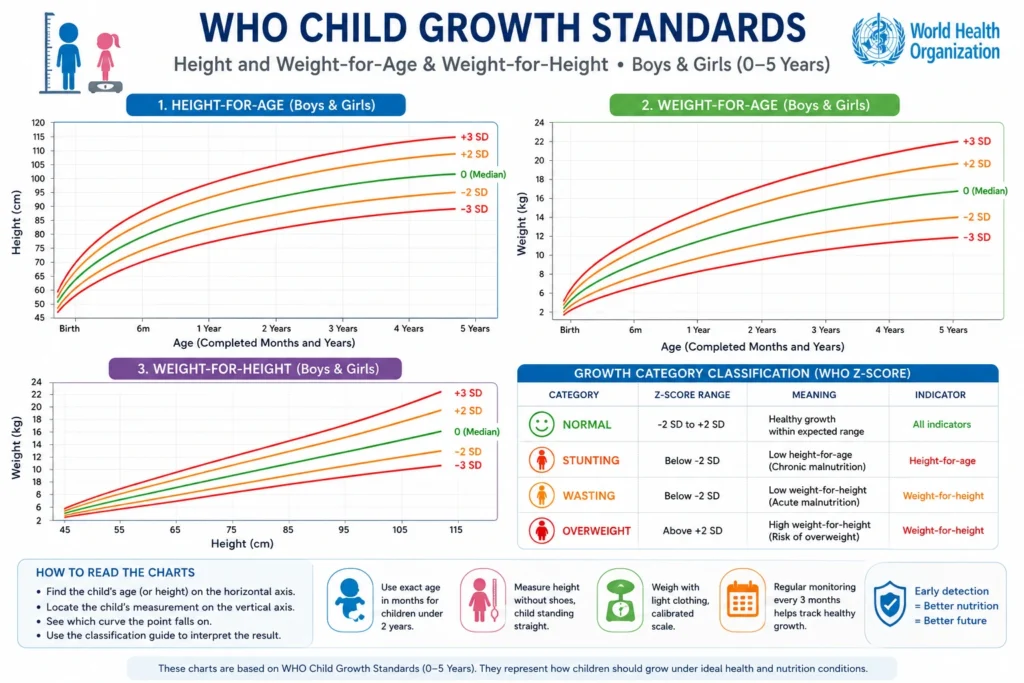
A height-weight chart in child nutrition is a reference tool used to compare a child’s physical growth (height and weight) with standard values based on age and sex.
It helps determine whether a child is growing in a healthy pattern according to the WHO growth standards.
Meaning of the height-weight chart
A height-weight chart is a visual or tabular guide that shows the expected range of height and weight for children at different ages.
It is used by health professionals and parents to quickly check if a child’s growth is on track or if there are signs of malnutrition or growth delay.
Why is age-wise comparison important?
Age-wise comparison is important because children grow at different rates as they get older. A 2-year-old and a 5-year-old cannot be evaluated using the same standards.
By comparing a child’s measurements with age-specific benchmarks, it becomes easier to identify growth issues early and take corrective nutritional or medical steps.
The difference between normal and abnormal growth
Normal growth means the child’s height and weight fall within the expected range for their age and sex, showing healthy development. Abnormal growth occurs when measurements are significantly below or above the standard range.
Low values may indicate undernutrition or stunting, while unusually high weight may suggest overweight or early metabolic risks.
WHO Growth Standards Explained
WHO growth standards are internationally accepted guidelines used to assess how children should grow under ideal health and nutrition conditions.
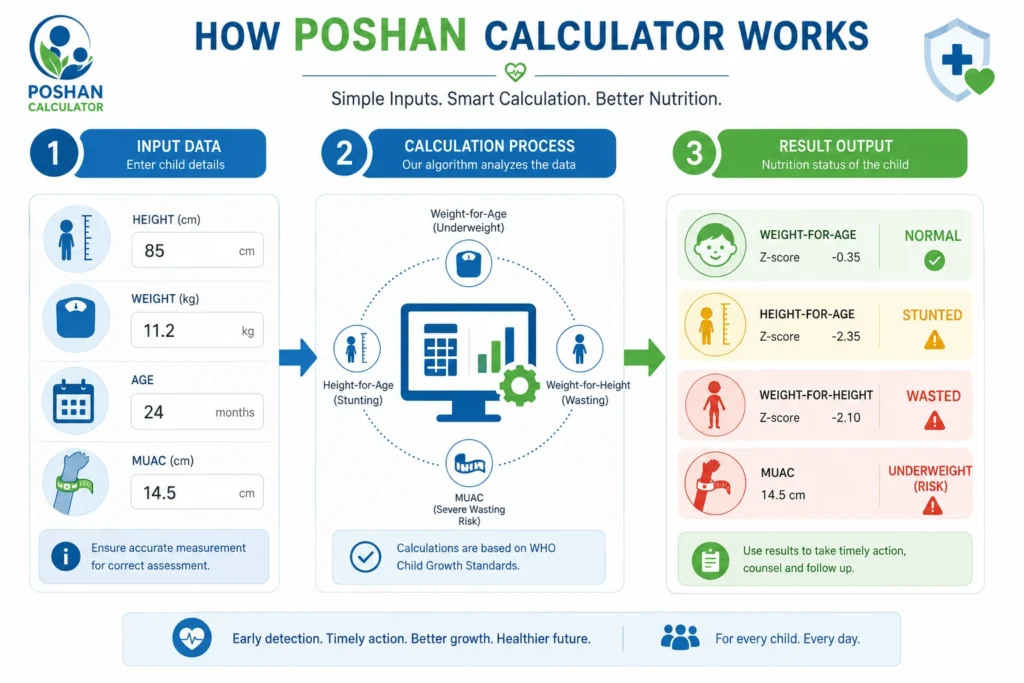
They are used worldwide in tools like the Poshan Calculator to compare a child’s height, weight, age, and MUAC against healthy reference data.
What are the WHO growth standards?
WHO growth standards are a set of charts and reference values developed by the World Health Organization.
These standards are based on data from healthy children from different countries who had proper nutrition, healthcare, and living conditions.
They act as a benchmark to check whether a child’s growth is normal or not.
Height Weight Chart for Boys (0–5 Years)
This section provides a general WHO-based height and weight reference range for boys aged 0 to 5 years. These values help parents and health workers understand whether a child’s growth is within a healthy range.
Small variations are normal depending on genetics and environment.
Boys Growth Table Overview
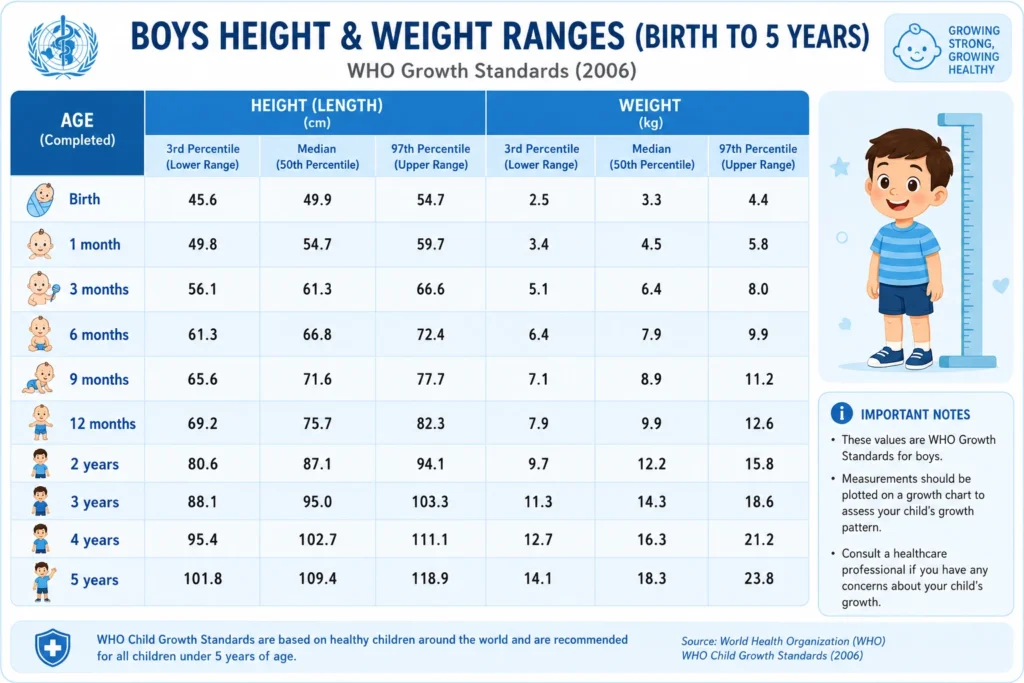
The growth chart for boys shows expected height and weight ranges at different ages. It is used to compare a child’s development with standard WHO growth patterns.
If a child’s measurements fall significantly below or above these ranges, further nutritional assessment may be needed.
Age-Wise Height and Weight Ranges
| Age (Boys) | Average Height (cm) | Average Weight (kg) |
| Birth | 48 – 52 cm | 2.5 – 3.8 kg |
| 6 months | 63 – 69 cm | 6.5 – 8.5 kg |
| 1 year | 73 – 78 cm | 8.5 – 10.5 kg |
| 2 years | 81 – 88 cm | 10 – 12.5 kg |
| 3 years | 89 – 96 cm | 12 – 14.5 kg |
| 4 years | 96 – 104 cm | 14 – 17 kg |
| 5 years | 103 – 111 cm | 16 – 19.5 kg |
These ranges are general reference values. A child may still be healthy even if slightly above or below the range, as growth depends on nutrition, genetics, and overall health.
Height Weight Chart for Girls (0–5 Years)
This section presents WHO-based reference values for height and weight in girls aged 0 to 5 years. These ranges help in assessing whether a child is growing normally according to global child growth standards.
Girls growth table overview
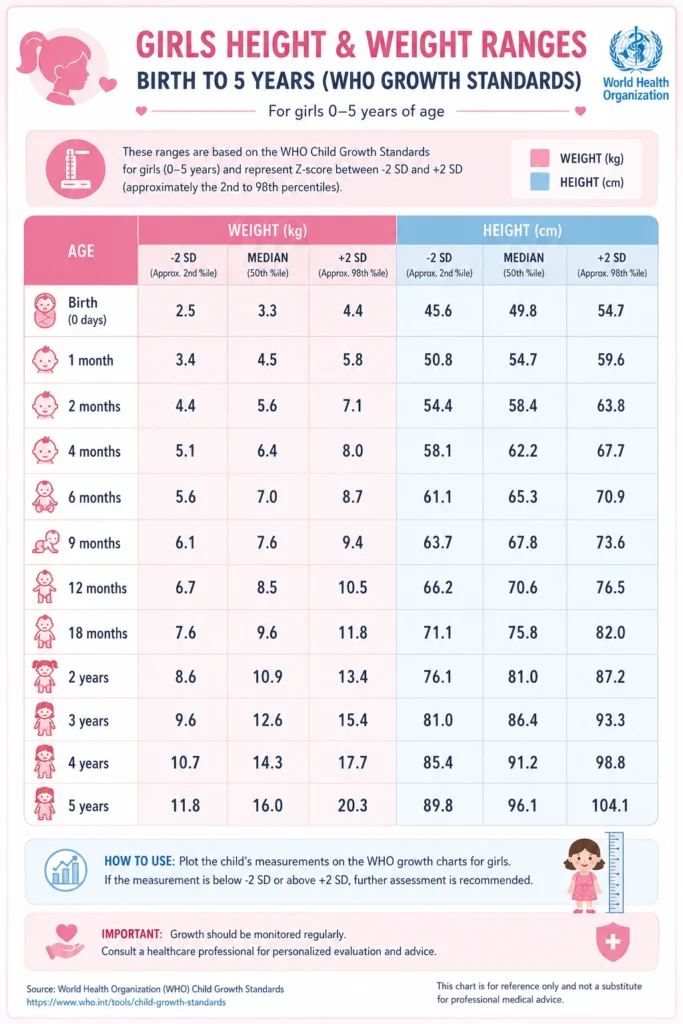
The growth chart for girls shows expected height and weight ranges at different ages. It is used to compare a child’s physical development with WHO standards.
These values are general guidelines, and small variations can occur due to genetics, nutrition, and health conditions.
Age-Wise Height and Weight Ranges
| Age (Girls) | Average Height (cm) | Average Weight (kg) |
| Birth | 47 – 51 cm | 2.5 – 3.6 kg |
| 6 months | 62 – 68 cm | 6.0 – 8.0 kg |
| 1 year | 71 – 77 cm | 8.0 – 10.0 kg |
| 2 years | 80 – 87 cm | 9.5 – 12.0 kg |
| 3 years | 88 – 95 cm | 11.5 – 14.0 kg |
| 4 years | 95 – 103 cm | 13.5 – 16.5 kg |
| 5 years | 102 – 110 cm | 15.5 – 19.0 kg |
These values help in the early detection of undernutrition or growth delays. Regular monitoring ensures timely intervention for better child health and development.
How to Use the Height-Weight Chart
Using a height-weight chart is a simple process that helps you check a child’s growth status by comparing measurements with WHO reference standards.
Step 1: Measure height correctly
Measure the child’s height using a stadiometer or a flat measuring surface. The child should stand straight, barefoot, with heels together and head aligned properly.
Make sure the body is not bending or slouching to avoid incorrect readings.
Step 2: Measure weight accurately
Weigh the child using a calibrated weighing scale. The child should wear minimal clothing for accurate results. Ensure the scale is placed on a flat surface and shows a stable reading before recording the weight.
Step 3: Match the age group
Identify the child’s exact age in years or months. This is important because height and weight standards vary at different ages.
Select the correct age group from the chart before making any comparison.
Step 4: Compare with the chart
Match the recorded height and weight with the values in the chart for the same age group. Check whether the measurements fall within the normal range.
If values are significantly lower or higher, it may indicate undernutrition, wasting, stunting, or overweight, and further assessment may be needed.
Signs of Malnutrition in Children
Malnutrition in children can affect physical growth, immunity, and overall development.
It is usually identified by comparing a child’s height, weight, and age with WHO growth standards, but there are also visible signs that can help in early detection.
Underweight signs
Underweight children have a lower body weight than expected for their age. Common signs include low energy, frequent illness, tiredness, poor appetite, and slower physical development.
In many cases, the child may look thinner than other children of the same age.
Stunting signs
Stunting refers to low height for age and is usually caused by long-term malnutrition. Signs include shorter height compared to peers, delayed physical growth, and sometimes delayed mental or learning development.
Stunting often develops gradually and may not be noticed early without regular monitoring.
Wasting signs
Wasting indicates low weight for height and is a sign of recent or severe malnutrition. Children may appear very thin with visible ribs, reduced muscle mass, weakness, and frequent infections.
Wasting is considered a serious condition and requires immediate nutritional attention.
Factors That Affect Child Growth
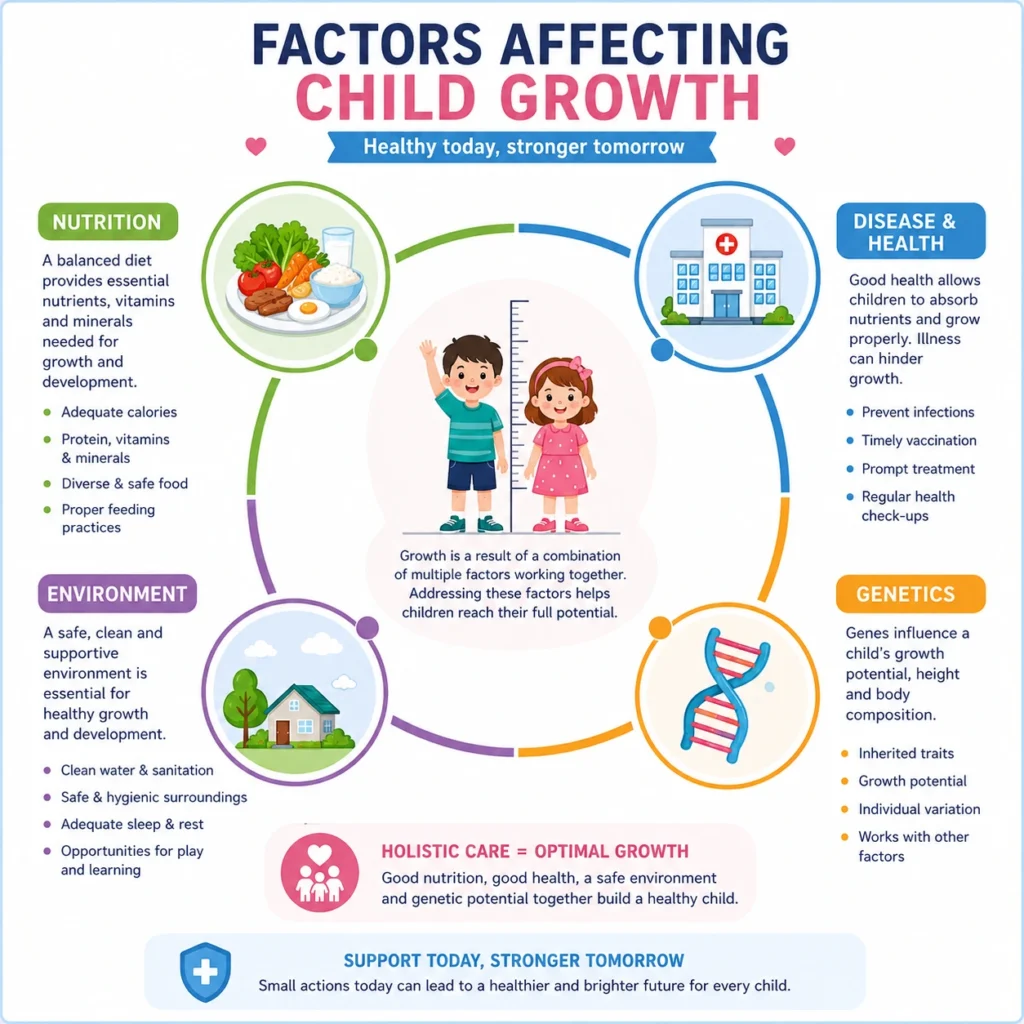
Child growth is influenced by multiple factors, including nutrition, health conditions, environment, and genetics. These factors work together and determine how a child’s height and weight develop over time.
Nutrition and diet
Proper nutrition is the most important factor in child growth. A balanced diet with adequate protein, vitamins, and minerals supports healthy weight gain and height development.
Poor nutrition, low food intake, or lack of essential nutrients can lead to underweight, stunting, or delayed growth.
Diseases and infections
Frequent illnesses and infections can negatively affect a child’s growth by reducing appetite and nutrient absorption.
Conditions like diarrhea, respiratory infections, or chronic diseases can slow down weight gain and impact overall development if not treated properly.
Environmental and genetic factors
A child’s environment and genetics also play an important role in growth. Clean water, hygiene, and safe living conditions support healthy development, while poor sanitation increases the risk of disease.
Genetics determines the natural growth potential, but proper nutrition and care are still essential to reach that potential.
Tips to Improve Child Height and Weight Naturally
Improving a child’s height and weight naturally requires consistent nutrition, proper care, and healthy daily habits. Small lifestyle changes can significantly support healthy growth over time.
Balanced diet suggestions
A balanced diet should include all major food groups such as grains, fruits, vegetables, dairy, and healthy fats. Meals should be given at regular intervals to maintain energy levels.
Avoid excessive junk food, sugary drinks, and processed snacks, as they provide low nutrition and can affect growth.
Protein-rich foods
Protein is essential for muscle growth and overall development. Include foods like eggs, milk, yogurt, lentils, beans, chicken, fish, and nuts in the child’s daily diet.
These foods help in building body tissues, improving immunity, and supporting healthy weight gain.
Healthy habits for growth
Encourage regular physical activity, outdoor play, and adequate sleep, as these are important for proper growth hormone function.
Ensure the child sleeps on time and gets enough rest. Maintaining good hygiene and regular health checkups also helps prevent illnesses that can slow down growth.
Common Mistakes Parents Make
When tracking a child’s growth using a Poshan Calculator or height-weight chart, small mistakes can lead to wrong conclusions. Avoiding these errors is important for accurate assessment.
Wrong comparison methods
One common mistake is comparing a child’s growth with that of other children instead of the WHO growth standards. Every child grows differently, so direct comparison with siblings or peers can be misleading.
Growth should always be checked against age-appropriate charts or calculators.
Ignoring small changes
Parents often ignore small changes in height or weight over time. Even slight drops or slow growth can be early signs of nutrition issues.
Regular tracking is important to identify trends early instead of waiting for major problems to appear.
Not using proper tools
Using incorrect or uncalibrated tools, like faulty weighing scales or improper height measurements, can give wrong results.
In some cases, people also rely on guesswork instead of using a proper Poshan Calculator or WHO-based chart, which reduces accuracy and may delay necessary action.
FAQs
What is the Poshan Calculator Height Weight Chart?
It is a tool that helps assess a child’s growth by comparing height, weight, age, and MUAC with WHO growth standards. It shows whether a child is growing normally or facing nutritional issues like underweight, stunting, or wasting.
Is the WHO growth chart the same worldwide?
Yes, WHO growth charts are global standards used in many countries. They are based on data from healthy children across different regions and are designed to represent ideal growth conditions for all populations.
What is a normal child’s weight?
Normal child weight depends on age, gender, and height. There is no single fixed number. A child is considered normal if their weight falls within the WHO-recommended range for their specific age and height group.
How accurate is the Poshan Calculator?
A Poshan Calculator is highly accurate when the correct data is entered. It uses WHO growth standards and reduces human error by automatically calculating results. However, accuracy still depends on the correct measurement of height, weight, and age.
What is stunting and wasting?
Stunting refers to low height for age, usually caused by long-term malnutrition. Wasting refers to low weight for height, often caused by recent or severe malnutrition. Both conditions indicate nutritional problems and may require medical attention.
Conclusion
Summary of the chart and calculator importance
The Poshan Calculator and height-weight chart are both important tools for monitoring child growth using WHO standards. The chart helps in manual comparison of height and weight, while the calculator provides quick and accurate results.
Together, they make it easier to identify nutritional issues like underweight, stunting, and wasting at an early stage.
Final advice for parents
Parents should regularly monitor their child’s growth and not ignore small changes in height or weight. Always use proper tools and WHO-based standards for accurate assessment.
If any signs of malnutrition appear, timely consultation with a health professional and improved nutrition can help support healthy growth and development.